Discovery of Roman Battlefield Poses Historical Riddle
FYI.
http://www.spiegel.de/international/ger ... 20,00.html
I am almost done with The Decline and Fall of the Roman Empire and found this interesting tie-in article today.
German Archaeologists Hail New Find
Moderator: JOHN THURSTON
-
Dale Houser

- Posts: 101
- Joined: Fri Aug 11, 2006 2:43 pm
- Location: Oakton, VA
German Archaeologists Hail New Find
The martial arts begin and end with respect...
-
JOHN THURSTON
- Posts: 2445
- Joined: Sat Nov 28, 1998 6:01 am
- Location: MARSHFIELD, MA. USA
- Contact:
Roman Expansion or "Vexilation"
HI Dale:
Thanks for posting this. Many "Vexilations" (punitive but not occupation oriented attacks) were mounted by the Romans in reprisal for the disaster at Teutoberger Wald (near Bremen as mentioned I assume).
It is impossible to tell how deep into Germany Germanicus, specifically, would have taken his raids and incursions against the Cheruschi (hub of the Teutoberger Wald ambush).
Hermann (aka Arminius) the leader of the Cherushi and the allies in the attack were surely decimated in Germanicus' reprisals.
At the Time of the reprisals and vexillations one Flavus, the brother of Herman was fighting on the Roman side.
The brothers hated each other. Also, Hermann's Family had been taken prisoner and were in capivity in Rome dufring the period of the reprisals.
My feeling is that they were not treated badly.
If I can get a look at the weapons i could date the time of the battle(s) or vexilation(s) mentioned in the site for which you provided the link.
I'll get back to you on this.
However, the "Emporer" Maximus Thrax reigned for three years in the 3rd Century and, as did most emporers (contrary to popular belief that they ALL were primarily devoted to debauchery) spent most of his time in the saddle. The cognomen "Thrax" may have come from his putative origin in Thrace.
John
Thanks for posting this. Many "Vexilations" (punitive but not occupation oriented attacks) were mounted by the Romans in reprisal for the disaster at Teutoberger Wald (near Bremen as mentioned I assume).
It is impossible to tell how deep into Germany Germanicus, specifically, would have taken his raids and incursions against the Cheruschi (hub of the Teutoberger Wald ambush).
Hermann (aka Arminius) the leader of the Cherushi and the allies in the attack were surely decimated in Germanicus' reprisals.
At the Time of the reprisals and vexillations one Flavus, the brother of Herman was fighting on the Roman side.
The brothers hated each other. Also, Hermann's Family had been taken prisoner and were in capivity in Rome dufring the period of the reprisals.
My feeling is that they were not treated badly.
If I can get a look at the weapons i could date the time of the battle(s) or vexilation(s) mentioned in the site for which you provided the link.
I'll get back to you on this.
However, the "Emporer" Maximus Thrax reigned for three years in the 3rd Century and, as did most emporers (contrary to popular belief that they ALL were primarily devoted to debauchery) spent most of his time in the saddle. The cognomen "Thrax" may have come from his putative origin in Thrace.
John
Last edited by JOHN THURSTON on Tue Dec 23, 2008 3:36 pm, edited 1 time in total.
"All Enlightenment Gratefully Accepted"
-
JOHN THURSTON
- Posts: 2445
- Joined: Sat Nov 28, 1998 6:01 am
- Location: MARSHFIELD, MA. USA
- Contact:
?
I had not heard of the Emporer "Maximus thrax".
I will find out more about him.
J
I will find out more about him.
J
"All Enlightenment Gratefully Accepted"
-
JOHN THURSTON
- Posts: 2445
- Joined: Sat Nov 28, 1998 6:01 am
- Location: MARSHFIELD, MA. USA
- Contact:
Maximinus Thrax
There were several titles given to this man. I unabshedly cite them from wikipedia.
Gaius Julius Verus Maximinus, Maximiminus Thrax (ie:Maximinus the Thracian.) and Maximinus I.
As the succession process became unstable (transfer by bloodline is better than by blood shed, perhaps) and the increasing inportance and/or interference of the military led to the "Year of the Three Emporers" (Galba C.Nymphidius Sabinis, Otho, Vitellius and Vespasian) (Yes I know that makes 4, but perhaps the founding of a 'new line' exempted Vepasian from being so included) the same flaw, ie: a system of succession, resulted in a severe breakdown (sic) in the manner by which a new Emporer was chosen.
This was not unlikely as there was none. At least, there was none that worked .
The Senate's powers had not been taken away in a "coup" by Augustus but, it is my belief, in a series of gentle pushes, not the least of which was the establishment of a parallel and eventually more effective bureacracy than that to that which answered to the Senate.
If loyalty and power does not lie in the Senate, then no Republic, per se, existed. Democracy was as unthinkable as a "King" to the True Power of Roman (prior to the 'Reign of the Armiies" which the Empire sufferred through often if intermitently) the Patrician class.
Ab Initio, a member of the Patrician Class could function as an attorney but, genrally speaking. could not be considered to be "in trade". this same defintion was (more loosely) applied with respect to the 19th Century British "Gentleman" ie: you could hold office, earn income from ventures and estates, serve in the military, earn income from agriculture from land holdings, but if you were Directly involved in shoveling the manure (apply this to lawyers and farmers) you were not a "Patrician" in the first case or a gentleman in the second.
It is not possible for me to trace precisely how this came about.
However, think on the matter that the largest single employer in the US is the Pentagon, which has a massive bureacratic system and the ability to absorb many others (CIA, FBI, Homeland Security, Army, Navy Air Force,) all of which in turn have their supporting agencies and commands. Is it such a leap then to see who, in time of crisis, the people might look for stability if the civil branch and/or electoral system consistently failed them.
You have to be very rich to become President and, it seems, considerably duplicitous.
"From the Death of Commodus to the accession of Diocletian was disrupted by usurpation and Civil War"
Thus the end of the familial (well sort of ) Julio-Claudian dynasty with the death of Nero gave rise to a vicious period of "the year of the three emporer" (and the establishment of the "Flavian" line (also not stricly familial) which began with the death of Commodus, interupted only briefly by the Severan Emporers, perhaps, it comes as no surprise that another year of many emprorers arose, only this time it was the year of the Six Emporers.
These were Maximus Thrax, Magnus (unresearched) Quartinus (unresearched) Gordian I and Gordian II, Pupenius, (Maximus)Balbinus and Gordian III. (238ce)
It was a Long Stretch thereafter, and not an overly stable one, until Diocletian took the throne.
Most of the intervening Emporers, such as Maximinus Thrax et ux, receive little attention. This lack of attention is perhaps broken only by Septimus Severus and others worthy of mentiion, but whom I do not wish to discuss at this time.
To move on, it is unlikely that the ax head shown in the article cited was a weapon of war, but that of the Engineers.
The Book "Roman Military Equipment" states: "The spear is ubiquitious in nature" and, unlike the image in our heads, the type of Spears used at any one time was impossible to classify exactly.
Those shown in the Photos in the cited work appear to be classifiable as being from the 3rd Century AD. I will attach pictures later and at least make a brief attept to discuss the area of origins of similar spear heads and "Thrax's Reign and Campaigns".
The Allemani were perhaps the succesors or the same tribe as referred to in "De Bellum Gallicum".
Major Historical Legionary Fortresses bordered the "Agri Decumantes" since the Time of the Julio Claudians (Argentorum, Vindonessa, Augusta Vindeloricorum, Constantia) . The Allemani appeared to have axpanded into the Empire from the Agri Decumantes.
Gaius Julius Verus Maximinus, Maximiminus Thrax (ie:Maximinus the Thracian.) and Maximinus I.
As the succession process became unstable (transfer by bloodline is better than by blood shed, perhaps) and the increasing inportance and/or interference of the military led to the "Year of the Three Emporers" (Galba C.Nymphidius Sabinis, Otho, Vitellius and Vespasian) (Yes I know that makes 4, but perhaps the founding of a 'new line' exempted Vepasian from being so included) the same flaw, ie: a system of succession, resulted in a severe breakdown (sic) in the manner by which a new Emporer was chosen.
This was not unlikely as there was none. At least, there was none that worked .
The Senate's powers had not been taken away in a "coup" by Augustus but, it is my belief, in a series of gentle pushes, not the least of which was the establishment of a parallel and eventually more effective bureacracy than that to that which answered to the Senate.
If loyalty and power does not lie in the Senate, then no Republic, per se, existed. Democracy was as unthinkable as a "King" to the True Power of Roman (prior to the 'Reign of the Armiies" which the Empire sufferred through often if intermitently) the Patrician class.
Ab Initio, a member of the Patrician Class could function as an attorney but, genrally speaking. could not be considered to be "in trade". this same defintion was (more loosely) applied with respect to the 19th Century British "Gentleman" ie: you could hold office, earn income from ventures and estates, serve in the military, earn income from agriculture from land holdings, but if you were Directly involved in shoveling the manure (apply this to lawyers and farmers) you were not a "Patrician" in the first case or a gentleman in the second.
It is not possible for me to trace precisely how this came about.
However, think on the matter that the largest single employer in the US is the Pentagon, which has a massive bureacratic system and the ability to absorb many others (CIA, FBI, Homeland Security, Army, Navy Air Force,) all of which in turn have their supporting agencies and commands. Is it such a leap then to see who, in time of crisis, the people might look for stability if the civil branch and/or electoral system consistently failed them.
You have to be very rich to become President and, it seems, considerably duplicitous.
"From the Death of Commodus to the accession of Diocletian was disrupted by usurpation and Civil War"
Thus the end of the familial (well sort of ) Julio-Claudian dynasty with the death of Nero gave rise to a vicious period of "the year of the three emporer" (and the establishment of the "Flavian" line (also not stricly familial) which began with the death of Commodus, interupted only briefly by the Severan Emporers, perhaps, it comes as no surprise that another year of many emprorers arose, only this time it was the year of the Six Emporers.
These were Maximus Thrax, Magnus (unresearched) Quartinus (unresearched) Gordian I and Gordian II, Pupenius, (Maximus)Balbinus and Gordian III. (238ce)
It was a Long Stretch thereafter, and not an overly stable one, until Diocletian took the throne.
Most of the intervening Emporers, such as Maximinus Thrax et ux, receive little attention. This lack of attention is perhaps broken only by Septimus Severus and others worthy of mentiion, but whom I do not wish to discuss at this time.
To move on, it is unlikely that the ax head shown in the article cited was a weapon of war, but that of the Engineers.
The Book "Roman Military Equipment" states: "The spear is ubiquitious in nature" and, unlike the image in our heads, the type of Spears used at any one time was impossible to classify exactly.
Those shown in the Photos in the cited work appear to be classifiable as being from the 3rd Century AD. I will attach pictures later and at least make a brief attept to discuss the area of origins of similar spear heads and "Thrax's Reign and Campaigns".
The Allemani were perhaps the succesors or the same tribe as referred to in "De Bellum Gallicum".
Major Historical Legionary Fortresses bordered the "Agri Decumantes" since the Time of the Julio Claudians (Argentorum, Vindonessa, Augusta Vindeloricorum, Constantia) . The Allemani appeared to have axpanded into the Empire from the Agri Decumantes.
Last edited by JOHN THURSTON on Thu Jan 01, 2009 8:09 pm, edited 1 time in total.
"All Enlightenment Gratefully Accepted"
-
JOHN THURSTON
- Posts: 2445
- Joined: Sat Nov 28, 1998 6:01 am
- Location: MARSHFIELD, MA. USA
- Contact:
Maximus Thrax (cont'd)
It will/would become clearer to those reading this difficult to overlay thread if it is remembered that after the "Varian Disaster" early in his "Principiate" ( I will not say Emporer as Augustus considered himself the "First Man in Rome" (principal man?) and not King or Emporer, and later became the Permanent "First Man in Rome".
Perhaps, as we know it the Word Emporer did not yet exist as we know and apply it.
If "Augustus had "willy nilly" proclaimed himself "King" or "Dictator for life" his life may have cut short in the manner of his Uncle's.
In any event (one of my favorite change of direction phrases) Augustus did two things we should make note of as respects this thread: 1. he more or less recognized the Rhine and the Danube as the Natural boundaries and 2. he limited the number of Legions to 30. ( some say 25)
As reference to a Pre Constantine list of Legions this would be shown to be an unrealistic number and many on the pre conceived list we have in our minds, as well as the Weapons and Formations most of which were taken from various anachronistic points of View.
However the spearpoints shown do correlate to spearheads of the time of "thrax".
I am not aware at this point in time ( the reign of "Thrax') whether or not that the Allemani were able to hold on to their gains across the Rhine/Danube frontiers (Limitansiensis).
The Rhine Danube frontier was a spearpoint in itself pointing into the heart of the Empire at the boundaries of Germania Inferior (Holland) Belgica, Germania Superior, and Rhaetia (switzerland). Constantia is, of course, in Switzerland on the southern side of Lake Constance.
Some Battles with the Allemani are Shown on the "Alemmani" map in 268 (Italia or Cisalpine Gaul), and 271 (also in Italia). These are beyond the scope this essay and later that "Thrax's victorie against the Allemani.
Critical to the Empire would have been the Legionary Strongholds show as with the area of expansion of the Allemani in the 260's: and several more in Alemmanic hands at the time of the Fall of Empire in the West.
It is also noted that the Area Referred to as the Agri Decumantes was surrendered by the Emprie "in the 260's". Despite "Thrax's" victories in that time frame.
However, the Place of any Legionary Victories under "Thrax" could easily have extended into what was or is Germany Proper, depending on what date you use.
The fact that Germany and Poland were moved at least in a third part many miles to the West of their locations ante WWII.
It should also be born in mind that the 'old" legionary Numbering and deployment systems would most probably still extant at the time of "Thrax's" brief reign.
Dale has hit a nerve in the sense that Gibbon who refferred to "Thrax" as Maximin and some considerable attention will be paid to him in this thread.
Gibbon clearly acheived a severe dislike of "Maximin" . His title for the Chapter on Thrax was 'the elevation and territory of Maximin":
"the dark and sanguiary soul of the tyrant was open to every against those among his subjects who were distinguished by birth Or Merit" (Gibbon being of the "Gentleman' period clearly would have sympathies twoard inherited status than we, now, here in the US would entertain.)
J
Perhaps, as we know it the Word Emporer did not yet exist as we know and apply it.
If "Augustus had "willy nilly" proclaimed himself "King" or "Dictator for life" his life may have cut short in the manner of his Uncle's.
In any event (one of my favorite change of direction phrases) Augustus did two things we should make note of as respects this thread: 1. he more or less recognized the Rhine and the Danube as the Natural boundaries and 2. he limited the number of Legions to 30. ( some say 25)
As reference to a Pre Constantine list of Legions this would be shown to be an unrealistic number and many on the pre conceived list we have in our minds, as well as the Weapons and Formations most of which were taken from various anachronistic points of View.
However the spearpoints shown do correlate to spearheads of the time of "thrax".
I am not aware at this point in time ( the reign of "Thrax') whether or not that the Allemani were able to hold on to their gains across the Rhine/Danube frontiers (Limitansiensis).
The Rhine Danube frontier was a spearpoint in itself pointing into the heart of the Empire at the boundaries of Germania Inferior (Holland) Belgica, Germania Superior, and Rhaetia (switzerland). Constantia is, of course, in Switzerland on the southern side of Lake Constance.
Some Battles with the Allemani are Shown on the "Alemmani" map in 268 (Italia or Cisalpine Gaul), and 271 (also in Italia). These are beyond the scope this essay and later that "Thrax's victorie against the Allemani.
Critical to the Empire would have been the Legionary Strongholds show as with the area of expansion of the Allemani in the 260's: and several more in Alemmanic hands at the time of the Fall of Empire in the West.
It is also noted that the Area Referred to as the Agri Decumantes was surrendered by the Emprie "in the 260's". Despite "Thrax's" victories in that time frame.
However, the Place of any Legionary Victories under "Thrax" could easily have extended into what was or is Germany Proper, depending on what date you use.
The fact that Germany and Poland were moved at least in a third part many miles to the West of their locations ante WWII.
It should also be born in mind that the 'old" legionary Numbering and deployment systems would most probably still extant at the time of "Thrax's" brief reign.
Dale has hit a nerve in the sense that Gibbon who refferred to "Thrax" as Maximin and some considerable attention will be paid to him in this thread.
Gibbon clearly acheived a severe dislike of "Maximin" . His title for the Chapter on Thrax was 'the elevation and territory of Maximin":
"the dark and sanguiary soul of the tyrant was open to every against those among his subjects who were distinguished by birth Or Merit" (Gibbon being of the "Gentleman' period clearly would have sympathies twoard inherited status than we, now, here in the US would entertain.)
J
"All Enlightenment Gratefully Accepted"
-
JOHN THURSTON
- Posts: 2445
- Joined: Sat Nov 28, 1998 6:01 am
- Location: MARSHFIELD, MA. USA
- Contact:
Map Aids
These are aids via maps to show the areas that Dale posted on.
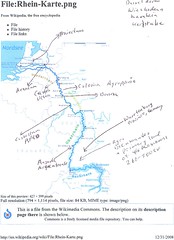
The rhine and some roman fortress cities names.

Poor Map Showing the Augustan frontier.
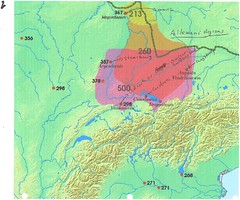
Alemmani Areas and Battle Cisties with dates.

Baden Wurtennburburg, where the Agri Decumante now sit.

Roman spear head from the "Thrax era" Quite different from Republican and Early Augustan Pilum Heads.

Picture from the Site Dale quoted for comparison with pictures from "Roman Military weapons"
I will attempt to make a rough place of the Augustan Legions in the area at the time, but not on this thread.
The rhine and some roman fortress cities names.
Poor Map Showing the Augustan frontier.
Alemmani Areas and Battle Cisties with dates.
Baden Wurtennburburg, where the Agri Decumante now sit.
Roman spear head from the "Thrax era" Quite different from Republican and Early Augustan Pilum Heads.
Picture from the Site Dale quoted for comparison with pictures from "Roman Military weapons"
I will attempt to make a rough place of the Augustan Legions in the area at the time, but not on this thread.
"All Enlightenment Gratefully Accepted"
